


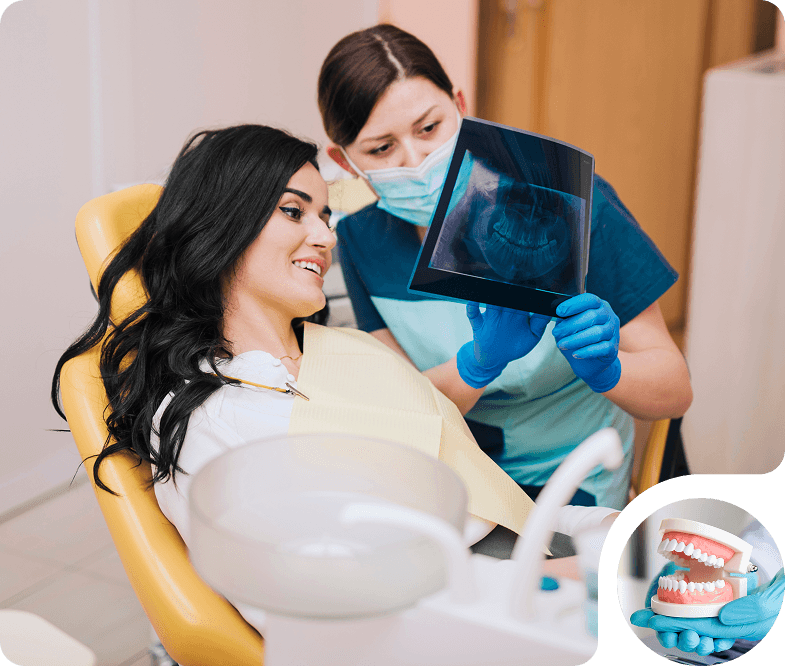
Dentures aren’t just about restoring your missing teeth; they’re also essential for maintaining your oral health. By choosing full or partial dentures, you’re making a smart choice to reduce the risk of gum and bone diseases. Not only that, but dentures also have the added benefit of making you look younger.
If you’re dealing with multiple missing teeth, full or partial dentures are an excellent treatment option to explore.
Find quick answers to common questions about our dental services, procedures, and patient care in our FAQ section.
Dentures are custom-made removable or fixed appliances that replace missing teeth and restore your ability to eat, speak, and smile confidently.
You may need dentures if you:
Full (complete) dentures replace an entire upper or lower set of teeth. They sit directly on your gum and bone tissue, held in place by natural suction and dental adhesive.
Partial dentures — also called bridges — fill in the gaps left by only some missing teeth and can be either removable or fixed. At Excel Dental, your dentist will evaluate your situation and recommend the best type for your needs.
Common indicators include:
With proper care, dentures typically last 5 to 10 years before they need to be relined, rebased, or replaced. Over time, your jawbone and gum shape naturally change, causing dentures to loosen and fit differently.
Yes, but there is an adjustment period. Start with soft foods cut into small pieces and chew slowly on both sides. Over time, most patients can eat a wide variety of foods. Avoid very hard, sticky, or chewy foods that can dislodge or damage your dentures.
Proper denture care is simple and similar to caring for natural teeth:
This is an important consideration. Traditional dentures sit on top of the gums and do not stimulate the jawbone the way natural tooth roots do. Over time, this leads to gradual bone resorption—the jawbone slowly shrinks.
This is why dentures may need to be relined or replaced over the years. If long-term bone preservation is a priority, we can discuss implant-supported dentures as an alternative.
Implant-supported dentures are anchored to dental implants surgically placed in the jawbone, providing significantly more stability than traditional dentures.
Key differences:
Many dental insurance plans, including MassHealth, provide some coverage for dentures as a tooth replacement option. Coverage varies based on your specific plan — whether it covers full, partial, or implant-supported dentures.
Don’t have insurance? Excel Dental’s team can also discuss flexible payment options to make your care affordable. Visit ourexceldental.com/patients for more information. Contact your nearest Excel Dental location to verify your benefits before your appointment.
It is generally not recommended to sleep with dentures in. Removing them at night gives your gum tissue time to rest, reduces the risk of bacterial buildup, and helps maintain healthier gums. Always store them in water or a denture solution overnight.